
Promoting (and observing) Pollinators
Claudio is a very engaging speaker! The information was clear, accessible, and useful. My attempt at a summary follows (see link below to see his presentation for PBS):
1/3 of crop species are dependent on pollinators and about 90% of the work is done by bees of all kinds. Of those, European honeybees have been the workhorses of commercial agriculture. They are domesticated, easy to work with, have longer life-spans, and can be shipped easily from site to site. But hives have become more prone to collapse due to environmental stresses, pathogens, and mite infestations, and their rental fees have become more expensive.
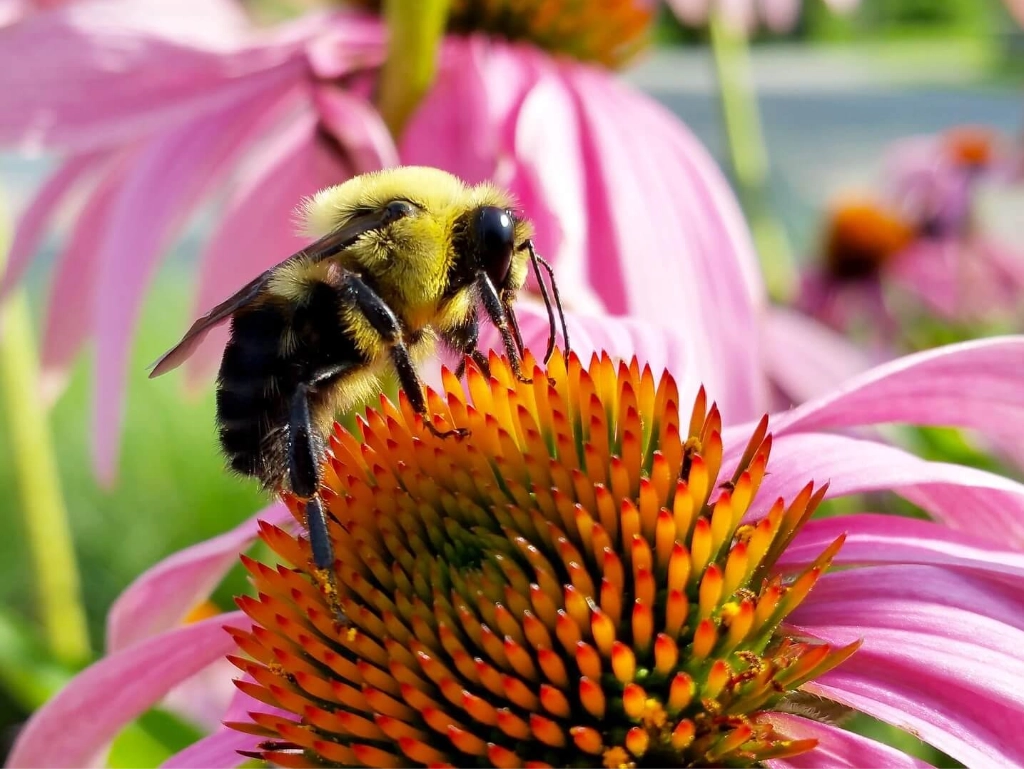
There are over 200K species of bees worldwide, 400 in Wisconsin alone. The native bees are very effective pollinators for crops and wildflowers. Some are social, such as the bumblebee; many are solitary with short life spans. The solitary bees, most of which dwell underground, emerge, seek pollen as food for their offspring, and then they are done until the next cycle. For these reasons, they can’t be managed as livestock like honeybees. But they do bring essential benefits and can potentially play a greater role in commercial production.
Native bees are an essential part of our ecosystem. But they are challenged by the changes in agriculture and urban/suburban landscaping that have taken place since the 1940s. Very large tracts, routine tilling, mono-cropping, pesticides, and fewer native wildflowers are all factors. We need these native bees. Their diversity affords greater resilience, a hedge against climate change and other threats. If we provide them the means to thrive, they can do the same for us.
Can native bees play a greater role for growers? How can we enhance the bee population and how can we learn where they are already abundant? Claudio’s lab is doing research to get answers to such questions. As part of its work, the lab is drawing on citizen science using the WiBee mobile app. Participants observe flower visits within a 3 foot square spot for 5 minutes at a time preferably several times a day and preferably on several successive days. The collected data will help provide a better understanding of patterns and trends. WiBee is fun (and helps open the user to the wondrous things that can take place in a 3’x3′ space); it’s easy; the data is yours to explore; and you are contributing to pollinator science.
Things we can do:
Download and use WiBee
Stop using pesticides
Add flowering natives that, taken together, provide pollen continuously from spring through fall.
Oh. And remember that a wasp is not a bee. One can be aggressive and can spoil your picnic, the other is docile and provides a lot of the food for your picnic.
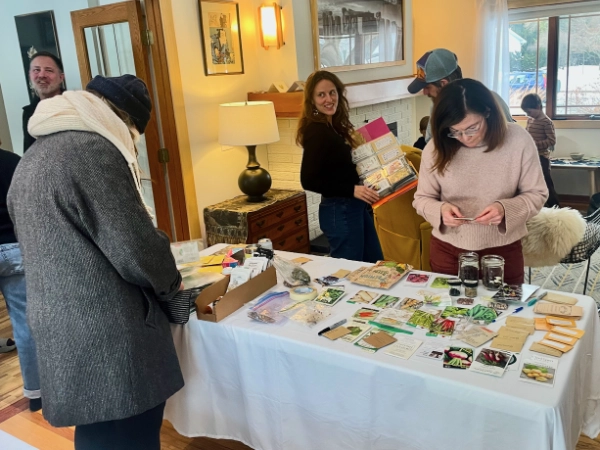
After-meeting-Pot-Luck at Plasterer/Starkweather house.
A wonderful afternoon/evening with good folks seated around our new SHF community banquet/harvest table, a table that was painstakingly crafted (not at all slapdash) by Joe and Scott from repurposed cyprus lumber from some of our old raised beds.
Resources
A similar presentation of Claudio’s for PBS.