Event Summaries

Honeybees in Hill Farms

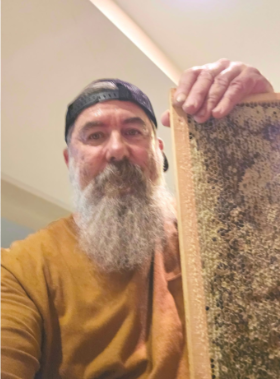
Hill Farms beekeeper Chris Pierce introduced us to his hives and helped us to understand what it means to be a honeybee colony and what it means to know and care for them.nnI used to think of hives as worthwhile things that I should keep at a respectful distance. Beyond that I knew next to nothing, just fragmented bits: bees pollinate, good; honey, good; there’s a queen and workers; hives fail increasingly often, bad.nnBut Chris gave us a glimpse into the rich and complex world that exists inside those hive boxes.  A colony has a mind and a purpose. Its rhythms are perfectly optimized to the seasons and the food sources available. Its ability to locate and gather food is built on amazing gps capabilities. It can recognize the beekeeper and know them not to be a threat. Some hives are more “opinionated” than others.nnWe got some insight into the structure of the hive boxes and the role of the beekeeper: helping the bees maintain the temperature inside the hive, inspecting the hives, helping to mitigate the spread of pathogens,  introducing new queens. and harvesting the honeynnChris had many kinds of honey on display, each type harvested at a different […]

Honeybees in Hill Farms Read Post »
Permaculture Talk, Tour, and Plant Sale

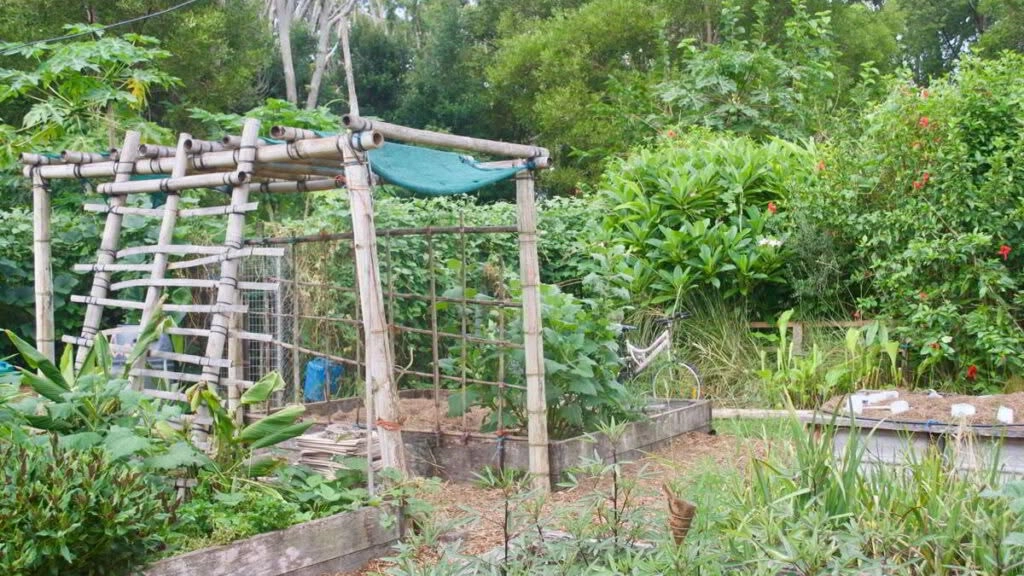
Sustainable Hill Farms Members took a field trip to a permaculture demonstration food forest on the northeast side of Madison.  The talk and tour as led by Susan Hessel, program manager of Madison PermacultureWorks/Madison Permaculture Guild.  The relatively small piece of land was carefully laid out according to soil type, sunlight, and plant relationships (guilds).  The richness, variety, and food  producing capacity were astounding.nnAdditionally, they held their Annual Perennial Edibles Plant Sale that day: stuff to buy.

Permaculture Talk, Tour, and Plant Sale Read Post »

Rain Garden

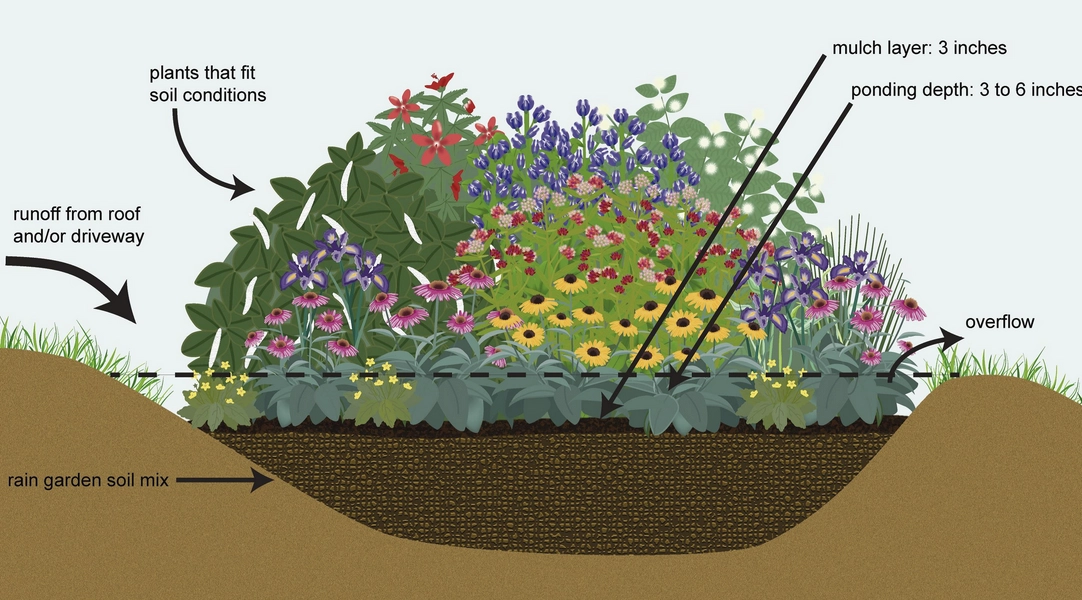
We held our second meeting, this time focusing on rain gardens.  We received good, practicable information, and just as importantly, we are beginning to get a real sense of ourselves as a group that is gaining cohesion and momentum.nn nnThe presenter was Gail Epping Overholt, Hill Farmer and natural resources educator at UW-Extension in Milwaukee and in Duluth Superior and recently retired from the UW-Madison Arboretum.  She described the benefits of rain gardens pointing out the _multiplier effect_ of having many located in our neighborhood.  But the focus was on getting it done.  Gail provided detailed, practical guidance and manuals on locating, sizing, preparing, and planting them.  Neighbor, Dave Stecher, then described his specific needs and goals as he plans to build his own this summer.  Shout out to Becki Fiegel for providing pictures and describing how she built her own two rain gardens.nnWyatt Orcutt announced his Eagle Scout project to remove invasives from Garner Park this Saturday March 15 from 10 – 4.  He asked volunteers to rsvpnnNext meeting is April 5, entomologist Claudio Gratton (https://entomology.wisc.edu/directory/claudio-gratton/) , will present on how best to support pollinators in Hill Farms.nnAs a group we are looking for alternatives to Facebook.  Currently we are

Rain Garden Read Post »

Seed swap and early planting

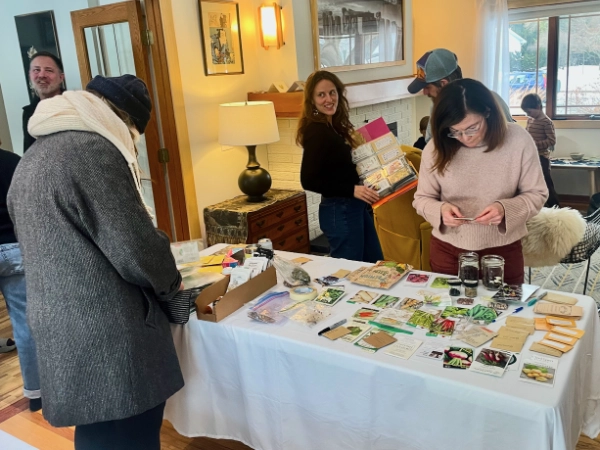
Dearest gentle reader, I bring you news and, yes, a bit of scandal. It is not a grand ball that will illicit this season’s gasps and whispers of intrigue. No, the talk of the town will be a gathering of gardeners. This group dares to plant at a time when the ground lay frozen and mute beneath our feet. Yet this is merely a taste of their outrageous behavior. They have been hoarding seeds all year for this much-anticipated moment. On February 7th, gardeners from all corners of Hill Farms will congregate for a most improper exchange that involves coveting thy neighbor’s best heirlooms. Vegetables with unbearably high yields. Flowers that would make Byron weep (but would that even be remarkable for him?). Countless seeds will be laid bare, prime for the taking. Now, will this author be there? One can’t know for certain. But I will say this: secrets will be exchanged, loyalties sown, and more than one gardener will leave with something delightful that they hadn’t arrived with. Miss it, and you may spend the season wondering what your bed might have been. Yours in soil and scandal, Lady Thistledown  

Seed swap and early planting Read Post »

Nally-Stecher yard and house tour

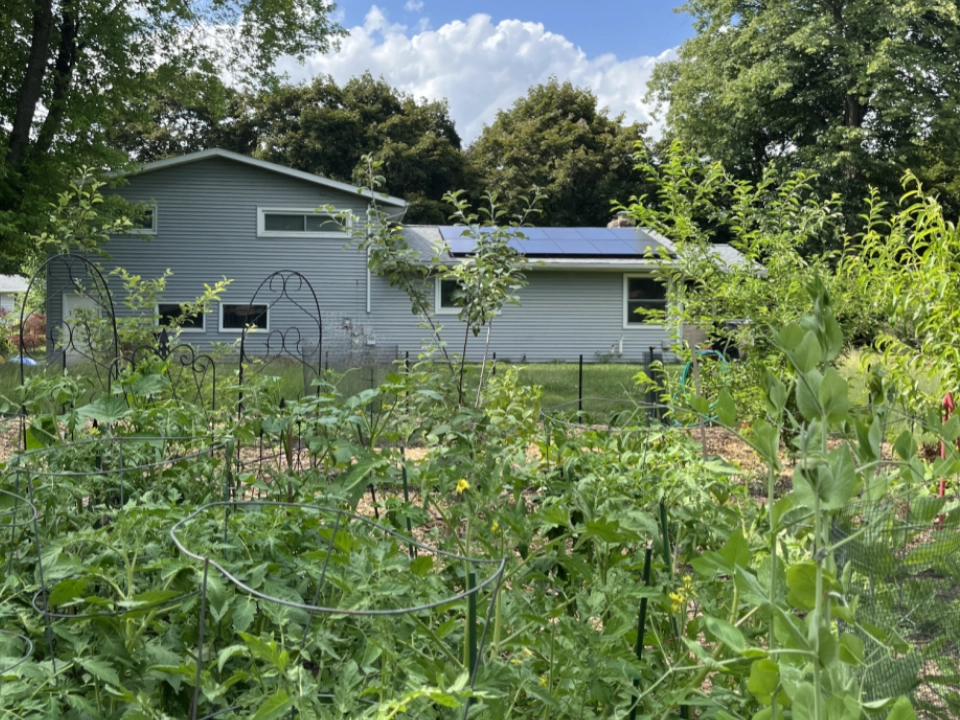
Dave Stecher and Katy Nally took us on a tour of their Hill Farms property and discussed the changes they’ve made and plan to make. As with most in this neighborhood, Dave and Katy bring impressive skill-sets.nnDave is a mechanical engineer by training and profession, a committed environmentalist, and a capable DIYer, thus bringing a great deal of insight into the choices they made, the constraints they faced and the tradeoffs that exist. Topics included: inside lighting, windows, harvesting wood from the property, energy recovery ventilation (ERV), a rain garden, and solar panels. Additionally he provided great tips such as how best to adjust the water softener to minimize salt consumption (and pollution).nnKaty drew from her decade-long avocation for permaculture (including volunteer work in Chile and Colombia) as she presented their developing food forest — fruit trees, blueberries, currants, raspberries, garden vegetables and more.

Nally-Stecher yard and house tour Read Post »

Summary of June 2025 Pollinator Presentation

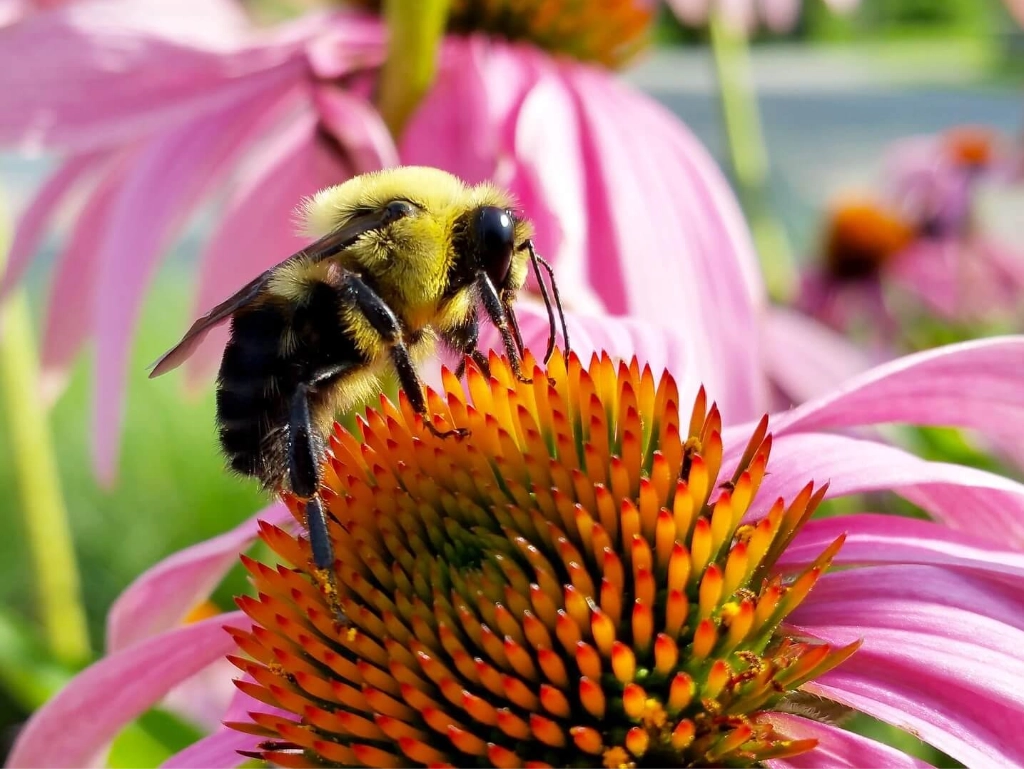
Promoting (and observing) Pollinators Claudio is a very engaging speaker! The information was clear, accessible, and useful. My attempt at a summary follows (see link below to see his presentation for PBS): 1/3 of crop species are dependent on pollinators and about 90% of the work is done by bees of all kinds. Of those, European honeybees have been the workhorses of commercial agriculture. They are domesticated, easy to work with, have longer life-spans, and can be shipped easily from site to site. But hives have become more prone to collapse due to environmental stresses, pathogens, and mite infestations, and their rental fees have become more expensive. There are over 200K species of bees worldwide, 400 in Wisconsin alone. The native bees are very effective pollinators for crops and wildflowers. Some are social, such as the bumblebee; many are solitary with short life spans. The solitary bees, most of which dwell underground, emerge, seek pollen as food for their offspring, and then they are done until the next cycle. For these reasons, they can’t be managed as livestock like honeybees. But they do bring essential benefits and can potentially play a greater role in commercial production. Native bees are an

Summary of June 2025 Pollinator Presentation Read Post »

Scroll to Top